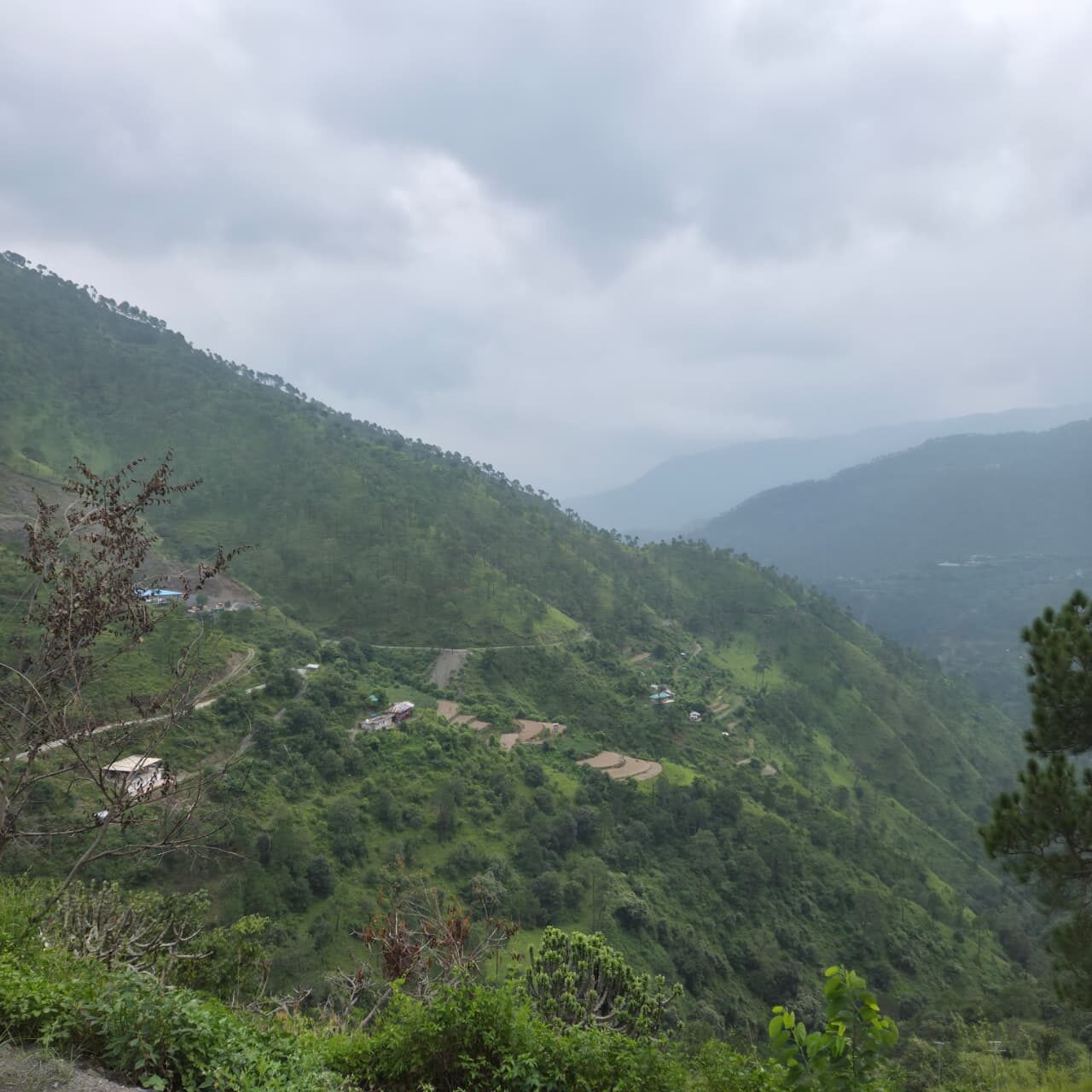
Himachal / Fractional ownership
Fractional ownership · Himachal Pradesh · through BRIKittA share of a hill house, not the whole of it
Fractional ownership lets you hold part of a holiday home and use it for a set number of days a year, for a fraction of the price. In Himachal we do this through BRIKitt. Below is how they describe it, what you actually end up owning, and what to ask before you sign anything.
- A share is
- One-eleventhBRIKitt's split, per home
- Held through
- A companyAn SPV owns the home
- Use
- Set daysAllotted by BRIKitt
- In Himachal now
- The VilasyaKufri, above Shimla
What you are buying
You are not buying part of a house. You are buying shares in a company that owns a house, along with the right to stay in it for some days each year. That distinction decides almost everything else on this page.
It suits people who want a few weeks a year in the hills without buying, furnishing and running a whole property. It suits people who want control less well.
How the model works
This is BRIKitt's description, not ours, and not a contract. Each card says where it came from. The documents they give you before you pay are what count.
A home in eleven shares
Each home is split into eleven equal shares. BRIKitt calls one share a BRIK. You can hold one or more.
Read on brikitt.com, 25 September 2026Held through a company
Each home sits in its own company, an SPV. Every BRIK owner is an equal shareholder in that company, and the company owns the home.
Read on brikitt.com, 25 September 2026Days of personal use
Each BRIK carries a set number of days a year in the home, which BRIKitt has described as thirty. You book them through their app.
From BRIKitt's material · confirm in their documentsUnused days let
Days you do not use can be let to guests through BRIKitt's management. What that earns is not something they, or we, can tell you in advance.
From BRIKitt's material · confirm in their documentsAn exchange programme
Your days can be swapped for stays at other BRIKitt homes, with the number of nights adjusted for the relative value of the two properties.
From BRIKitt's material · confirm in their documentsRun for you
Furnishing, management, repairs and utilities are handled by BRIKitt. The cost of that comes out of the owners, one way or another — ask how.
Read on brikitt.com, 25 September 2026BRIKitt's own site also describes fractional ownership as risk-free, high-return and easy to liquidate. We would not describe any property purchase that way, and we would not rely on it. Read the exit terms and the charges as figures, for the specific home.
A whole house, or a share
Neither is the better buy in general. They are different purchases, and the right one depends on how many days you will actually spend up there and how much you want to decide for yourself.
| Whole property | Fractional share | |
|---|---|---|
| What you hold | The property, in your name at the sub-registrar. | Shares in the company that owns the property. |
| Entry | The whole price, plus registry and furnishing. | One-eleventh, roughly, plus BRIKitt's charges. |
| Use | Whenever you like. | Your allotted days, reserved through BRIKitt. |
| Letting | Your decision, your operator, your terms. | BRIKitt manages it. You do not choose the guests or the rate. |
| Decisions | Yours alone. | Shared with ten other owners, under the company's rules. |
| Selling | Any buyer, any time, through anyone. | Under BRIKitt's exit terms. Read them before you buy, not after. |
| Upkeep | All of it, and finding the people to do it. | Handled for you, and charged for. |
If you want the house to yourself, want to let it your own way, or want to be able to sell to anyone, buy whole. See what we hold in Himachal.
What you actually own
Shares, not a sale deed
When you buy a flat, a sale deed in your name is registered at the sub-registrar. When you buy a BRIK, you get shares in the company that owns the home. Your rights come from the company's documents — the shareholders' agreement and whatever BRIKitt's terms add to it.
That is not a reason to avoid it. It is a reason to read those documents, have your own lawyer read them, and understand who decides what when eleven owners disagree.
Section 118 still applies
Himachal restricts who can hold land in the state, under Section 118 of the Tenancy and Land Reforms Act. In a fractional structure the question moves from you to the company: does the company that holds this home have the permission it needs?
Ask for that permission in writing, for the specific home, before you pay. A description of it is not the same thing.
Eight things to ask, in writing
Put these to BRIKitt for the specific home you are looking at. We will sit in on that conversation if you want us to. If an answer is vague, that is an answer.
The company
Which SPV holds this home, when it was incorporated, and who its directors are. Ask for the share certificate format and the shareholders' agreement.
Title and eligibility
Whose name the land is in, and the Section 118 position for that company holding it. Ask for the permission, not a description of it.
Your days
How many days a BRIK carries on this home, how they are allotted, how far ahead you can book, and what happens in peak season when eleven owners want the same week.
The letting
Who sets the rate, what the management fee is, how income is paid out, and how often you see the accounts.
The exchange
How the value of each home is set, who sets it, and how often it changes.
Every charge
Entry fees, annual maintenance, and any fee on exit or on profit — as figures, for this home, before you pay anything.
The exit
Any lock-in, how a share is sold, who buys it, how the price is set, and what happens if nobody does.
Tax
How the letting income and a later sale of shares are taxed in your hands. Ask your own CA — the answer depends on you, not the property.
The Vilasya, Kufri
Whole, or a share
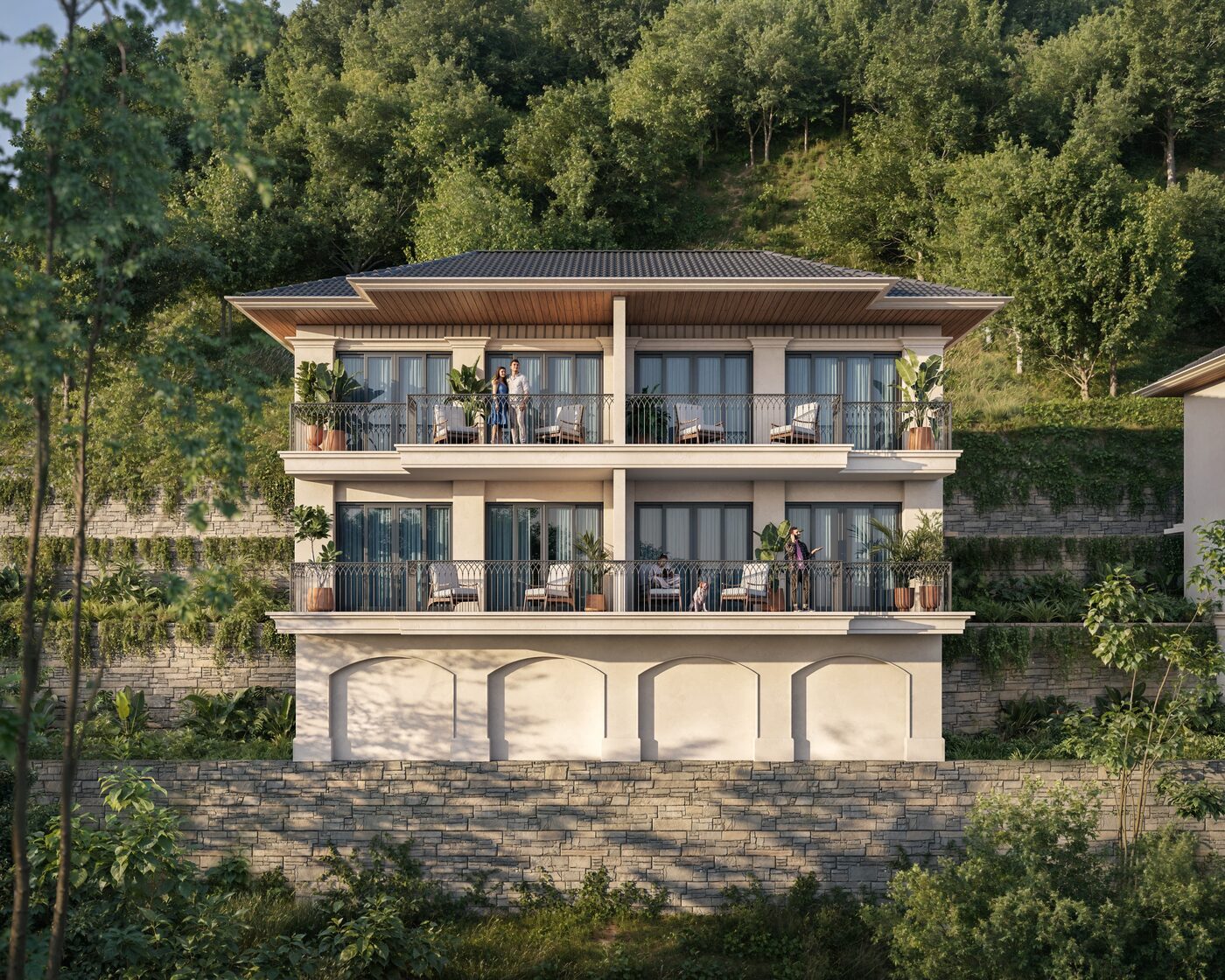
Villas and villaments on the Kufri road above Shimla. It can be bought outright, or as a fractional share through BRIKitt. The two are different purchases with different paperwork, and we will take you through either.
The image is the developer's render, not a photograph. We have not shot this site yet. More on the project, and what is and is not confirmed, is on the Himachal page.
Not confirmed: price per share, RERA registration number, possession date and the current stage on site. None of it has been read off a filing, so none of it is printed here.
Fractional ownership, answered
Several people jointly own one property and each gets a share of its use. In the BRIKitt model we work with, a home is split into eleven shares and held through a company, and each owner is a shareholder in that company with a set number of days in the home each year.
Yes. BRIKitt offers fractional shares in Himachal, and The Vilasya at Kufri, above Shimla, is currently available through them as a share as well as outright. We introduce you, go through what you would actually own, and hand over BRIKitt's documentation.
As BRIKitt describes it: each home is split into eleven shares called BRIKs and held in its own company. Each BRIK owner is a shareholder in that company, gets a set number of personal-use days a year, can have unused days let, and can exchange days for stays at other BRIKitt homes. The exact terms are theirs and are set out in their documents — read those, not a summary.
No, though it is often confused with one. A timeshare usually sells you the right to use a property for a period. In the BRIKitt model you hold shares in the company that owns the home, so you have a stake in the property's value as well as your days in it. Whether that suits you depends on the company's terms, particularly on exit.
Not directly. The company owns the property, and you own shares in the company. That is different from a registered sale deed in your own name, and it is the single most important thing to understand before buying. Ask for the shareholders' agreement and have your own lawyer read it.
Section 118 of the Himachal Pradesh Tenancy and Land Reforms Act restricts who can hold land in the state. In a fractional structure the question is whether the company holding the home has the permission it needs. Ask BRIKitt for that permission in writing for the specific home, before you pay.
We will not give you a figure. Letting income depends on the season, the home, how many owners use their days, and how the letting is run. Ask BRIKitt for the actual letting history of the home, if it has one, and the management fee. Nobody should be quoting you a return in advance.
BRIKitt sets the price per share for each home and it changes as homes sell and new ones launch. We will send you the current figure for a specific home with the date on it. We do not print a range here, because an undated price is worse than none.
Under BRIKitt's exit terms, which cover any lock-in, how a share is sold and how its price is set. A share in a company is a smaller market than a whole house, so read the exit terms as carefully as the entry ones.
Lower entry, no upkeep to organise, and access to more than one place through the exchange. The trade is control: you share the house, the calendar and the decisions with ten other owners, and you sell on someone else's terms. If you want the house to yourself, or want to let it your own way, buy whole.
We are a BRIKitt partner, so there is a commercial relationship on any share bought through us. What we do is introduce you, go through what the structure actually means for you, and tell you what to check. The structure, the terms and the management are BRIKitt's. If a whole property suits you better, we will say so.
Tell us how many weeks a year you will really spend up there.
That one number usually decides whether a share or a whole house makes sense. We will tell you which, including when the answer is neither.